loader image
Skip to main content

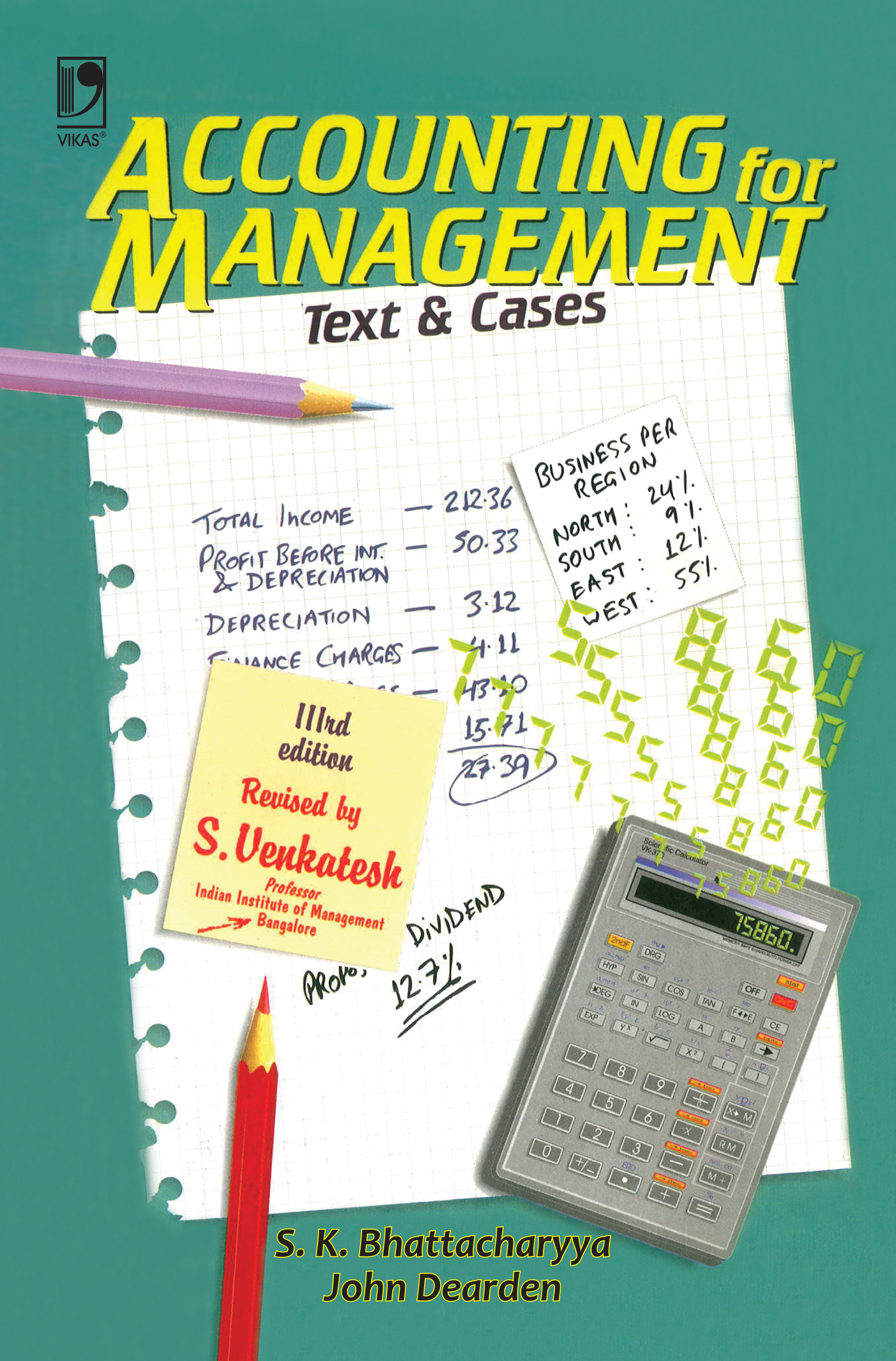
24 BCM5BO7 ACCOUNTING FOR MANAGEMENT

FREE
Updated 07 Oct 2024
Lessons 5
Language English ‎(en)‎
Skill Level Beginner

Course Overview

Lectures Hours per week: 5, Credit-4

Internal: 20, External: 80, Examination 2.5 Hours

Objectives:

To enable the students to understand the concept and relevance of Management Accounting.

To provide the students an understanding about the use of accounting and costing data for planning, control, and decision making.

Course Content

Loading...

Enrolment options

Lectures Hours per week: 5, Credit-4

Internal: 20, External: 80, Examination 2.5 Hours

Objectives:

To enable the students to understand the concept and relevance of Management Accounting.

To provide the students an understanding about the use of accounting and costing data for planning, control, and decision making.

Skill Level: Beginner
Guests cannot access this course. Please log in.

Related Courses

Module I: Management Accounting: Nature and Scope - Difference between cost Accounting, Financialaccounting and Management accounting - Recent trends in Management Reporting. (05 Hours, 5 marks)Module II: Analysis and Interpretation of Financial Statements: Meaning - Types and Methods of FinancialAnalysis - Comparative Statements - Trend Analysis - Common size Statements (aPage 23 of 59general discussion only). (10 Hours, 10 marks)Module III Ratio Analysis: Meaning - Nature - uses and limitations of Ratios - Liquidity, Profitability,Turnover, Solvency, Leverage. Market test Ratios. Construction of Financial Statements from ratios - Judgmentof financial stability through ratios - (Focus to be given to problems solving and Interpretation skills) (25 Hours,25 marks)Module IV: Fund Flow and Cash Flow Analysis: A. Fund Flow Statements: Meaning and concept of Fund -Current and Non Current Accounts Flow of fund - Preparation of Fund Flow statement - Uses and Significance.B. Cash Flow Statement: Difference between Fund flow Statement and Cash flow Statement - Preparation ofCash Flow Statement as per AS - 3 Norms - Direct and Indirect methods (Stress to be given to Problems). (25hours, 25 marks)Module-V: Managerial Decision making with the help of CVP Analysis : Marginal Costing - Fixed CostVariable Cost - Contribution - P/V Ratio - Break Even Analysis - Algebraic and Graphic presentation - Decisionmaking : Fixation of Selling Price - Exploring new markets - Make or Buy - Key Factor - Product Mix - Operateor Shutdown. (15 Hours, 15 marks)(Theory and Problems may be in the ratio of 40% and 60% respectively).

5 Lessons
Updated: Jun 2025

BCM3BO3: BUSINESS REGULATIONSCourse objectives: To familiarize the students with various laws in force on establishmentand running of business in the country and the legal aspects to be observed.

5 Lessons
Updated: Jun 2025
87 Enrolled
5 Lessons
Updated: Jun 2025
59 Enrolled

Students should know about the basic concept of marketing, principles and dynamics of retailing, Retail life cycle. 

5 Lessons
Updated: Jun 2025
36 Enrolled

Latest Courses

INTRODUCTION TO PERFORMANCE MANAGEMENT

5 Lessons
Updated: Nov 2025

FINANCING OF THE NEW PROJECT

5 Lessons
Updated: Nov 2025

SPREADSHEET FOUNDATIONS AND NAVIGATION

5 Lessons
Updated: Nov 2025

- MS Word: A word‑processing program used to create, edit, format, and print documents such as letters, reports, and resumes. Key features include text styling, tables, images, and mail‑merge. - MS Excel: A spreadsheet application for organizing, analyzing, and visualizing numerical data. It supports formulas, functions, pivot tables, charts, and basic data management. - MS PowerPoint: A presentation software for designing slide decks with text, graphics, animations, and transitions. It helps deliver information in a clear, visually engaging manner. - Basics of Internet: Understanding the Internet as a global network of interconnected computers, how data is transmitted (IP addressing, protocols), and web browsers for accessing online resources. - Internet Applications: Common tools and services such as email, search engines, online banking, e‑commerce, social media, and cloud storage (Google Drive, OneDrive) that enable communication, information retrieval, and online transactions.

5 Lessons
Updated: Nov 2025
59 Enrolled

MS Word: A word‑processing program used to create, edit, format, and print documents such as letters, reports, and resumes. Key features include text styling, tables, images, and mail‑merge. MS Excel: A spreadsheet application for organizing, analyzing, and visualizing numerical data. It supports formulas, functions, pivot tables, charts, and basic data management. MS PowerPoint A presentation software for designing slide decks with text, graphics, animations, and transitions. It helps deliver information in a clear, visually engaging manner. Basics of Internet Understanding the Internet as a global network of interconnected computers, how data is transmitted (IP addressing, protocols), and web browsers for accessing online resources. Internet Applications Common tools and services such as email, search engines, online banking, e‑commerce, social media, and cloud storage (Google Drive, OneDrive) that enable communication, information retrieval, and online transactions.

5 Lessons
Updated: Nov 2025
26 Enrolled

This course provides learners with a comprehensive understanding of the principles and practices that ensure the safety and quality of food from production to consumption. It covers the causes and prevention of food contamination, foodborne illnesses, and the importance of proper hygiene, sanitation, and safe food handling. Students explore key food safety management systems such as HACCP, GMP, and GHP, gaining skills in hazard identification, risk assessment, and control measures. The course also examines national and international food laws, including regulatory frameworks, standards, labeling requirements, and the role of organizations like the FDA, USDA, EFSA, FSSAI, and the Codex Alimentarius Commission in protecting consumers and facilitating fair trade. Additional topics include food inspection procedures, enforcement actions, food labeling rules, traceability, and emerging issues such as food fraud, GMOs, additives, and global food safety challenges. By the end of the course, learners understand both the scientific and legal aspects of food safety, enabling them to ensure regulatory compliance and promote public health within the food industry.

5 Lessons
Updated: Nov 2025
4 Enrolled
5 Lessons
Updated: Nov 2025
89 Enrolled
5 Lessons
Updated: Nov 2025
59 Enrolled

1. Develop Communication Skills Improve clarity of speech, voice modulation, and expressive language. 2. Enhance Creativity and Imagination Encourage students to imagine scenarios, create characters, and think creatively. 3. Build Confidence and Self-Expression Help learners overcome shyness and express ideas boldly. 4. Foster Social Skills and Teamwork Promote cooperation, negotiation, and group problem-solving through group performances. 5. Improve Emotional Intelligence Enable students to understand, express, and manage emotions through role-play. 6. Strengthen Critical Thinking Help students analyze characters, situations, and conflicts. 7. Encourage Cultural Awareness Introduce students to diverse cultures, traditions, and literary forms through plays. 8. Develop Appreciation of Literature and Art Understand dramatic texts, artistic expression, and performance styles. 9. Promote Body Awareness and Movement Skills Improve posture, gesture, coordination, and stage presence. 10. Enhance Listening and Observation Skills Encourage careful attention to others’ dialogues, expressions, and actions. 11. Instill Responsibility and Discipline Teach punctuality, rehearsal discipline, and commitment to group tasks. 12. Integrate Learning Across Subjects Connect drama with social studies, language, history, and moral education.

5 Lessons
Updated: Nov 2025

This course aims to improve language skills, critical thinking. Analytical skill of students 

5 Lessons
Updated: Nov 2025
51 Enrolled
5 Lessons
Updated: Nov 2025
60 Enrolled
5 Lessons
Updated: Nov 2025